
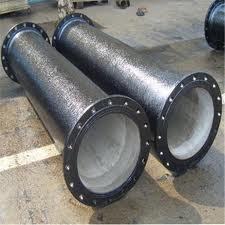
Industrial Di Pipes
900-30000 INR/Meter
Product Details:
- End Protector Plastic / Metal Caps
- Thickness 100 mm to 25 mm (variable by diameter)
- Other Material Internal Cement Mortar Lining
- Size DN 80 to DN 1000
- Feature High Strength, Leak Proof, Corrosion Resistant, Long Life
- Tolerance 1 mm
- Surface Treatment Bitumen Coated / Epoxy
- Click to View more
X
Industrial Di Pipes Price And Quantity
- 1000 Meter
- 900-30000 INR/Meter
Industrial Di Pipes Product Specifications
- Black / Dark Grey
- Industrial
- DN 80 to DN 1000
- 420 MPa minimum
- Ductile Iron
- Internal Cement Mortar Lining
- High Strength, Leak Proof, Corrosion Resistant, Long Life
- Alloy
- 200-220 HB
- Smooth, Anti-Corrosive Coating
- Round
- IS:8329 / EN545 / ISO 2531
- 1 mm
- Plastic / Metal Caps
- 100 mm to 25 mm (variable by diameter)
- 80 mm to 1000 mm
- Centrifugal Casting / Spun
- 6 m
- Pipes
- Bitumen Coated / Epoxy
Industrial Di Pipes Trade Information
- kolkata
- 10000 Meter Per Week
- 1 Week
- Yes
- Contact us for information regarding our sample policy
- All India
Product Description
The manufacturing process and its raw materials have an impact on the pipes strength, flexibility, finish, straightness, etc besides diameter and wall thickness. When it is required for corrosion protection with Galvanized surface, basic raw material and surface finish is more important.Engineered for Industrial Demands
Ductile Iron Pipes are meticulously designed to excel in tough industrial conditions. Withstanding pressures up to 25 bar and test pressures of 32 bar, these pipes reliably transport industrial water, sewage, and can be used for irrigation. Their push-on or mechanical joint systems ensure ease of installation and long-term operation, while their alloy composition delivers superior durability over decades.
Exceptional Corrosion and Impact Resistance
Each pipe is double-protected with a zinc coating plus a bitumen or epoxy outer layer, making them highly resistant to corrosion in challenging environments. The minimum 1.5 mm cement mortar internal lining further prevents chemical attack and ensures smooth fluid flow. This dual-layer approach maximises the pipes service life, even under aggressive operating conditions.
Certified Quality and Longevity
Manufactured using centrifugal casting or spun techniques for consistent quality and structural integrity, these pipes meet top international and Indian standards (IS:8329, EN545, ISO 2531). The design assures a minimum lifespan of 50 years, with the benefit of high tensile and hardness values. All pipes are supplied with end caps for clean delivery.
FAQs of Industrial Di Pipes:
Q: How are socket & spigot DI pipes with rubber gaskets installed?
A: Socket & spigot DI pipes use a push-on or mechanical joint where a rubber gasket is placed inside the socket. The spigot end of the next pipe is inserted into the socket, creating a leak-proof connection that accommodates slight movement and ground shifts. This straightforward installation process speeds up work on site and ensures joint integrity.Q: What makes these pipes suitable for industrial water supply and sewage systems?
A: With pressure ratings of PN10, PN16, and PN25, and a maximum operating temperature of 80C, these pipes can handle pressurized water, sewage, and even irrigation. Their high impact resistance, anti-corrosive coatings, and robust internal lining make them reliable under harsh industrial conditions, ensuring a long-lasting and leak-free pipeline.Q: When is it recommended to use DI pipes with this level of pressure?
A: DI pipes with test pressures up to 32 bar and high pressure ratings are ideal when the pipeline is subject to high surge pressures and demanding flow requirements. They are recommended for main transmission lines, urban water supply networks, sewage pumping mains, and large-scale irrigation projects, especially where durability and reliability are paramount.Q: Where can these pipes be supplied within India?
A: As a dealer, distributor, supplier, trader, and wholesaler, we can deliver DI pipes to any location across India. Our logistics network ensures timely supply whether for municipal projects, industrial sites, or agricultural installations, supporting both urban and rural infrastructure.Q: What process ensures the anti-corrosive and smooth surface finish of the pipes?
A: The manufacturing process involves centrifugal (spun) casting, which results in consistent wall thickness and strength. Following casting, pipes receive an external zinc coating topped with bitumen or epoxy for anti-corrosive protection. The internal surface receives a cement mortar lining, no less than 1.5 mm thick, providing a smooth, chemical-resistant flow path.Q: How do the pipes maintain leak-proof performance over long service life?
A: Leak-proof performance is achieved by precision engineering of push-on joints with rubber gaskets, advanced manufacturing tolerances (1 mm), and the use of high-strength ductile iron. The plastic or metal end protectors keep pipe interiors and ends debris-free until installation, while joint reliability and thorough coatings protect against leaks for an estimated 50-year service life.Q: What are the main benefits of using these DI pipes for water and sewage infrastructure?
A: Key benefits include high strength and hardness, robust corrosion and fire resistance, efficient installation, outstanding hydraulic performance due to smooth lining, and long-term service (up to 50 years). These features translate to lower maintenance, enhanced safety, and cost-effective lifetime operation for infrastructure projects.Tell us about your requirement

Price:
Quantity
Select Unit
- 50
- 100
- 200
- 250
- 500
- 1000+
Additional detail
Mobile number
Email

Other Products in 'Di Pipes' category
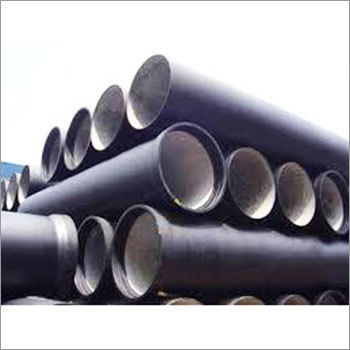

STREAMLINERS INDIA
GST : 19AJAPN1072G1ZE
Contact Details

- Building No./Flat No.: 153/A, Motilal Nehru Road, Nearby Lake Market Sub Post Office, Kolkata - 700029, West Bengal, India
- Phone :08045816325

- Ms Tapasvi Dixit (Partner)
- Mobile :08045816325
-
 Send Inquiry
 Send Inquiry
 Send Inquiry
 Send SMS
STREAMLINERS INDIA
All Rights Reserved.(Terms of Use)
Developed and Managed by Infocom Network Private Limited.
Developed and Managed by Infocom Network Private Limited.
 English
 Spanish
 French
 German
 Italian
 Chinese (Simplified)
 Japanese
 Korean
 Arabic
 Portuguese